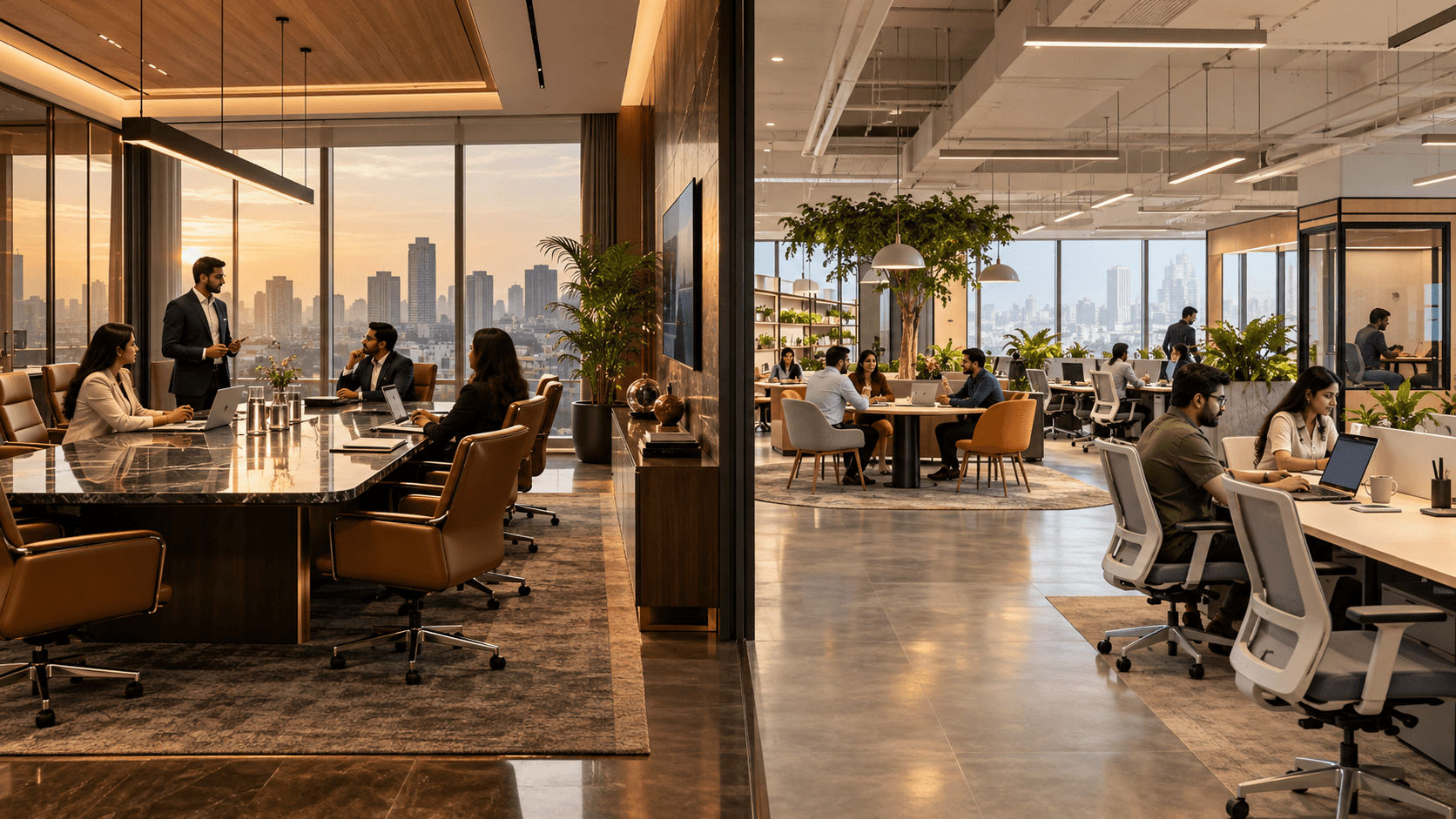
GSS Expansion Is Changing What Companies Need From Their Offices
Global Shared Services operations are becoming broader, more specialised and more strategic — and their real estate requirements are evolving with them.
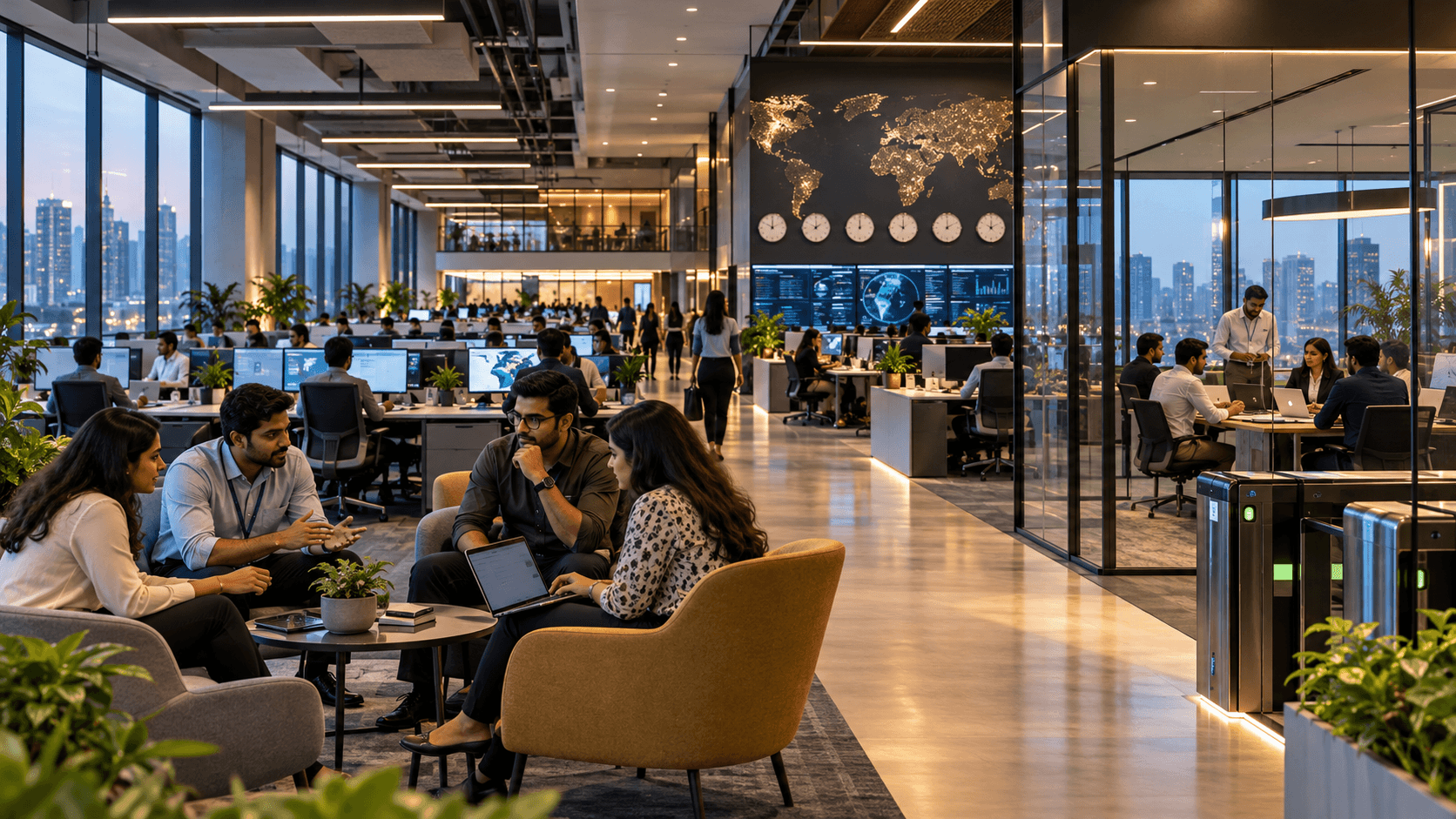
The GSS office is no longer just a back office
For years, shared-services operations were associated primarily with finance, HR, transaction processing and other centralised support functions.
That model has evolved.
Modern Global Shared Services organisations increasingly support technology, analytics, finance, procurement, risk, operations, engineering and specialised corporate functions.
As the role of these teams has expanded, so has the importance of their physical workplace.
The headline numbers
- TalentAccess to specialised talentLocation strategy
- ScaleAbility to expand rapidlyLarge floor plates
- FlexibilityMultiple occupation modelsManaged + conventional
Talent comes before rent
A GSS location decision often begins with a real estate requirement. But it should begin with a talent requirement.
Where do the employees live? How long are they willing to commute? Where are competing employers located? How quickly can the company hire? Can the market support another 500 employees?
These questions can matter more than a small difference in rent.
Hyderabad demonstrates the model
Hyderabad has developed into one of India's strongest enterprise office markets, supported by technology, life sciences, engineering and corporate services demand.
The city's large Grade A developments provide occupiers with the scale required for GCC and GSS operations.
But even within Hyderabad, the decision cannot stop at the city level.
Gachibowli, Financial District, HITEC City and other established corridors offer different combinations of talent accessibility, residential catchment, rental economics, building stock, transport, parking, expansion capacity and employee experience.
The first office doesn't have to be the final office
A company establishing a GSS operation may not know its eventual headcount. Starting with a massive conventional lease can create unnecessary commitment.
An alternative is a staged approach.
- Stage 1 — Establish: use a ready-to-operate environment and build the initial team.
- Stage 2 — Validate: understand hiring velocity, employee utilisation and operational requirements.
- Stage 3 — Scale: move into a larger permanent facility once the operating model is proven.
- Stage 4 — Optimise: create the long-term portfolio around cost, talent, resilience and business requirements.
Managed workspace can therefore act as a bridge between market entry and permanent occupation.
Infrastructure is part of the operating model
A GSS operation may support global teams across multiple time zones.
That creates requirements beyond normal office occupation: power redundancy, high-quality connectivity, security, access control, fire and life safety, 24/7 operations, backup infrastructure, facility management and business continuity.
For these occupiers, the building is not simply a container for desks. It becomes part of the operating infrastructure.
The five questions before selecting a GSS location
- Where does our talent actually live?
- How quickly can we scale the team?
- Can the building accommodate our growth?
- Can the infrastructure support our operating hours?
- What happens if our requirement changes?
Real estate decisions are made today, but business requirements can change significantly over a five- or ten-year lease. Flexibility therefore has a measurable value.
Norvane Capital Partners advises occupiers on the commercial real estate decisions that sit behind growth — from market selection and workplace strategy to transaction execution.